
Original exhibition poster Le Corbusier, 1962 - Mourlot
by nbmposter
Regular price$1,950.00 Sale pricePickup currently unavailable
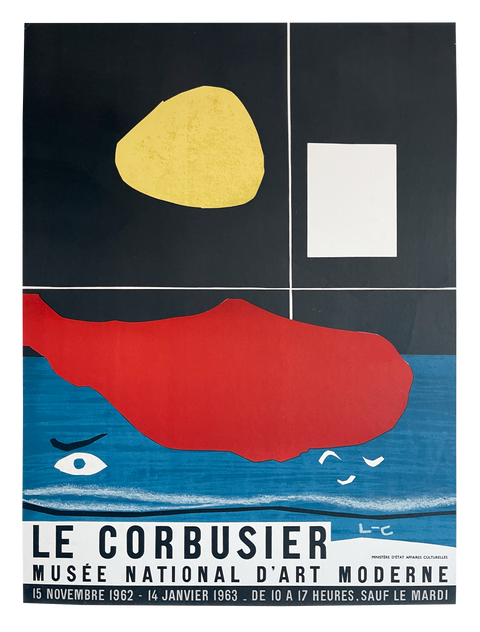
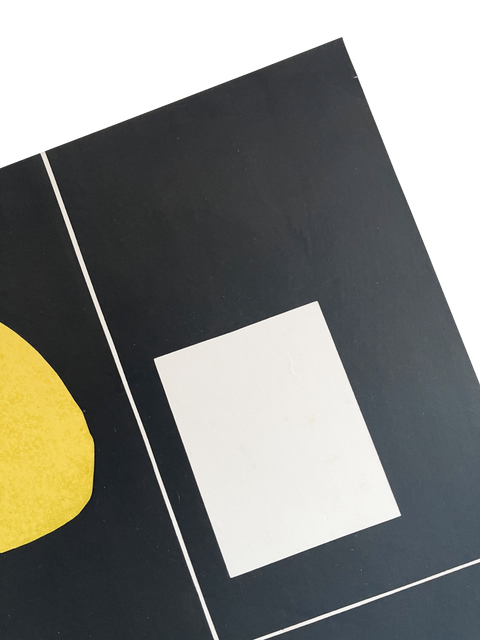
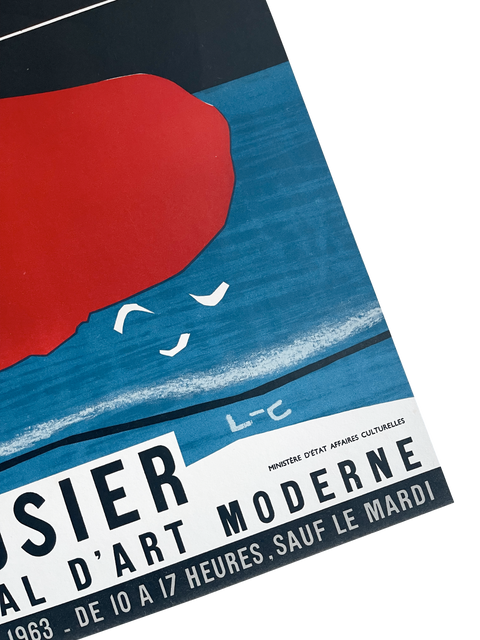
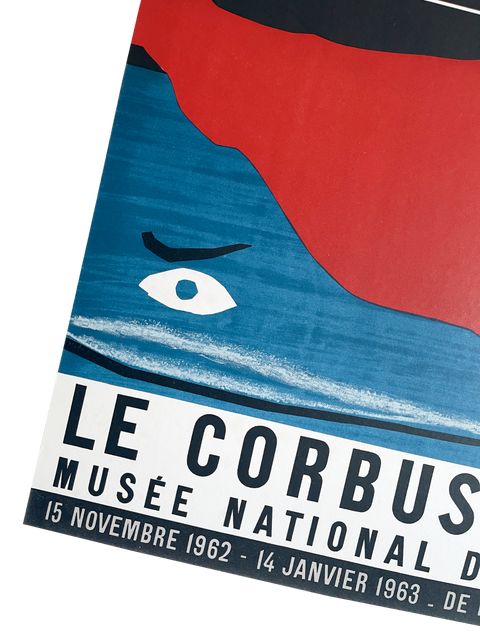
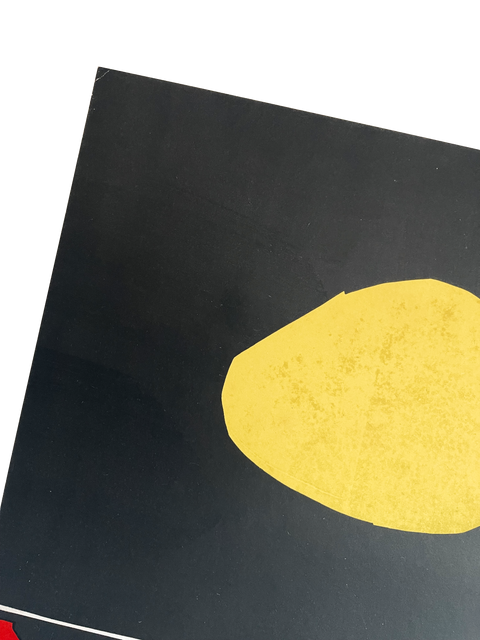
| Artist | Le Corbusier |
| Year | 1962 |
| Exhibition | Le Corbusier — Musée National d'Art Moderne, Paris |
| Printer | Mourlot Frères, Paris |
| Size | 51 × 65 cm (20 × 25.6 in) |
| Type | Original vintage lithographic exhibition poster |
| Backing | Freshly linen backed |
| Condition | A- — Overall Good |
This is an original lithographic poster created in 1962 by Le Corbusier and printed by Mourlot Frères for an exhibition at the Musée National d'Art Moderne in Paris — one of the most significant retrospectives of his career, held at France's premier institution for modern art at the very height of his international recognition. Three years later, Le Corbusier would be dead, drowned while swimming off Cap Martin. This poster belongs to the final chapter of his life: the period when the full scope of his achievement — architecture, painting, tapestry, sculpture, printmaking — was at last being understood as a unified whole.
Le Corbusier (1887–1965), born Charles-Édouard Jeanneret-Gris in La Chaux-de-Fonds, Switzerland, is universally recognised as the most influential architect of the 20th century — the creator of the Villa Savoye, the Unité d'Habitation in Marseille, the Chapel of Notre-Dame-du-Haut at Ronchamp, and the master plan for Chandigarh. But from his meeting with the Cubist painter Amédée Ozenfant in 1918 onwards, Le Corbusier was equally a visual artist — a painter, lithographer, sculptor and tapestry designer who produced over 450 canvases and an extensive graphic oeuvre across five decades. His artistic work, like his architecture, was governed by the same insistence on geometric clarity, elemental form and the harmony between human proportion and natural order.
Le Corbusier's relationship with Mourlot began in the mid-1930s and deepened in the final decade of his life, championed notably by the interior designer Heidi Weber, who encouraged him to continue working at the atelier even in old age. The lithographs produced from this collaboration — the Taurus series, the Modulor, the Minotaurus, the tapestry posters — form a coherent and intensely personal body of graphic work that runs parallel to his architecture and illuminates it.
The poster has been freshly linen backed — the gold standard of vintage poster conservation — ensuring the piece is stable, flat, and ready for framing.
A late masterwork on paper — Le Corbusier at the summit of his recognition, at the museum that understood him best, three years before his death.

Certificate of Provenance
Your certificate — unique to your piece — is included with every purchase and shipped alongside your artwork.